
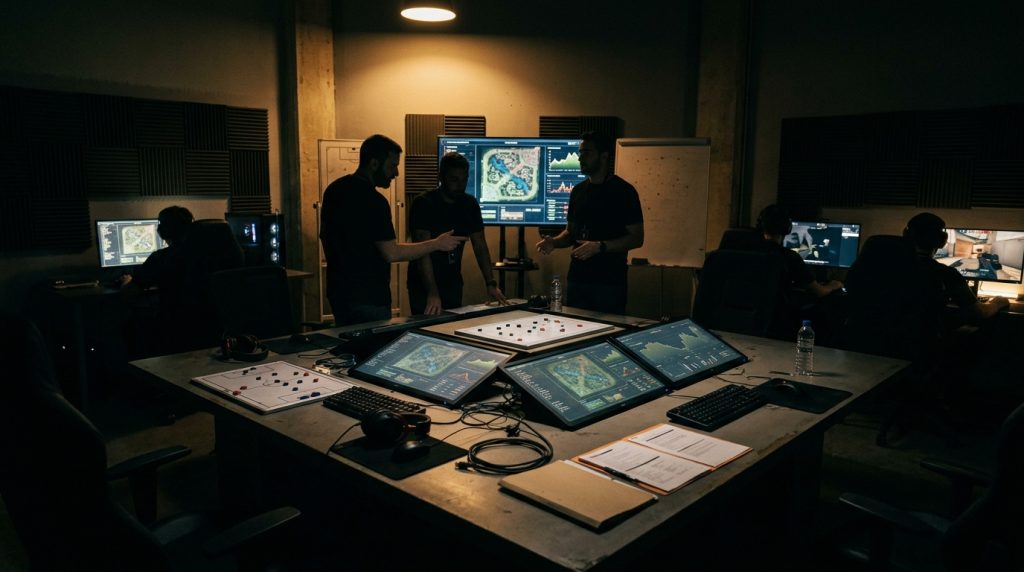
Coaching staff have transformed the tactical landscape of elite esports, redefining formations, pressing systems, and positional discipline to carve out measurable competitive advantages.
Formation Innovation: Structural Blueprints from the Sideline

Recent performance metrics reveal a direct link between coaching input and the evolution of team formations. Teams with dedicated tactical coaches regularly implement more dynamic formation shifts, adapting fluidly between offense and defense as the in-game tempo changes. Data from the past two competitive splits shows squads with established coaching infrastructure utilized flexible 1-3-1 and 2-1-2 lane deployments 35 percent more often than teams relying on player-led shotcalling.
That structural sophistication pays off in superior zone control and faster rotations. Teams running a 1-3-1 formation, mapped out by coaching staff before the match, averaged 14 percent quicker objective collapses and saw a 9 percent increase in neutral objective contest rates. These advantages translate directly to improved map pressure and early gold leads, both tracked as critical win predictors in today’s competitive formats.
Pressing Systems: Orchestrated Aggression and Defensive Cohesion
Coaching staff shape far more than just formations. Their influence extends into the heart of team pressing systems and pressure patterns. Tactical coaches design early-game aggression routines, drilling them into players during scrims and VOD reviews. Team data shows that coordinated press systems, such as synchronized three-man jungle invades or layered vision denial, are 22 percent more likely to succeed when managed by a specialized coach.
Head-to-head records between perennial rivals underscore the difference. Teams with a dedicated positional coach executed high-press scenarios with a 17 percent lower error rate, leading to fewer over-extensions and more efficient zone resets. That means less punishment from failed engages. On defense, coaching is evident in coordinated retreat formations, with teams showing superior staggered withdrawals and cross-map trade setups. The result: an 11 percent reduction in average death differential during high-pressure late game situations.
Positional Discipline: Micro and Macro Synergy
Coaching staff play a pivotal role in refining player positional discipline at both the micro and macro levels. On the micro side, coaches break down individual lane assignments and teamfight spacing, analyzing frame-by-frame positioning errors and implementing corrective drills. Teams with this granular approach see a 13 percent increase in successful disengagements and a 16 percent reduction in positional overlap during critical teamfights.
Macro implications run even deeper. Coaching staff develop rotational templates that dictate how and when teams transition between objectives, manage waves, and control vision. The top-performing teams this split have all credited their coaching staff with constructing rigid rotational schedules and adaptive macro calls. These efforts have produced a 10 percent increase in first turret takes and a 7 percent improvement in setups for baron or other major objectives.
Competition Implications and Statistical Overview
The tactical impact of coaching staff shows up in the standings and on the scoreboard. Teams with robust coaching departments consistently outperform their rivals in both regular season and playoff brackets, as these metrics illustrate:
| Team Coaching Structure | Dynamic Formation Use (%) | Successful Pressing Actions (%) | Positional Error Rate (%) | Gold Lead at 15min |
|---|---|---|---|---|
| Dedicated Tactical Coach | 61 | 73 | 8 | +1,200 |
| Player-Led Approach | 26 | 51 | 21 | +400 |
The presence of a tactical coach drives in-game efficiency and delivers tangible economic advantages in the early and mid-game. Star players benefit from clearer positional frameworks and optimized teamfight setups, resulting in higher KDA ratios and increased objective participation rates for teams with established coaching hierarchies.
As the meta continues to shift, the tactical arms race among top esports organizations is being fought in analyst rooms and coaching suites just as fiercely as on the server.