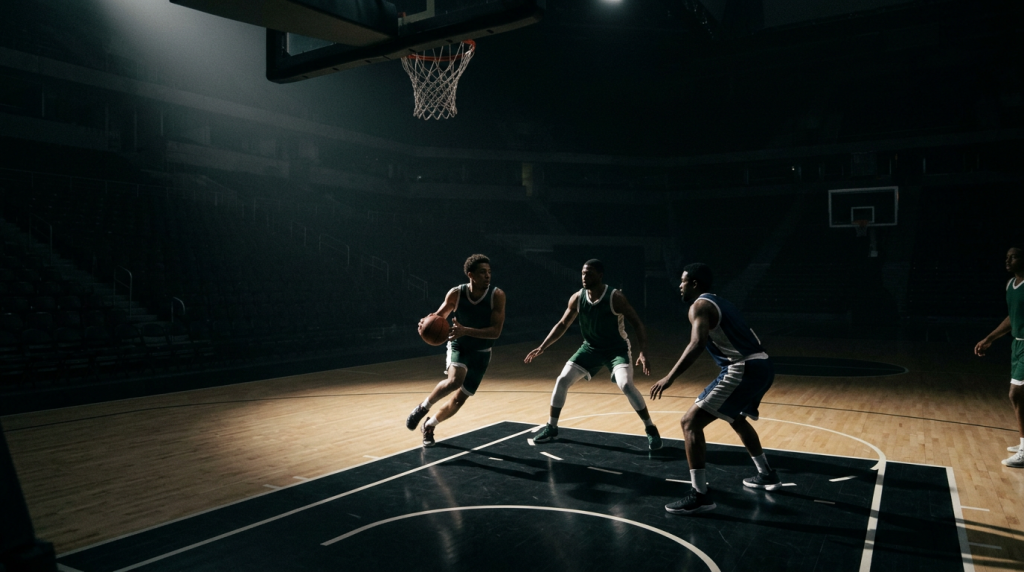
The Western Conference in basketball is entering a pivotal season, blending grit and youth, past glory and future potential. Four franchises, each with distinct identities, have sparked fresh anticipation: the seasoned Los Angeles Rams and San Francisco 49ers wielding experience and tactical mastery; the reinvented Seattle Seahawks, reshaping their core; and the rugged, physically imposing Arizona Cardinals, banking on a powerful front and youthful secondary. As the 2025 season looms, the question stands — can these veteran-led teams withstand the surging new wave of talent and innovation sweeping the West? With key players shifting, front-line strategies evolving, and playoff stakes soaring, the battle promises relentless intensity from the opening whistle to the final buzzer. From the Golden State Warriors’ famed pace-and-space brilliance to emerging challenges from the Denver Nuggets and Minnesota Timberwolves, the West’s dynamics weave a narrative of fascinating contrasts. This exploration dives deep into the roster moves, coaching philosophies, and statistical undercurrents that define this crucial clash of eras and ambitions.
Los Angeles Rams: Veteran Leadership Meets Youthful Defensive Surge in the West
The Los Angeles Rams epitomize a classic veteran core’s attempt to maintain dominance against the fast-approaching new generation. The addition of Davante Adams, a true WR1 with surgical route precision, transformed the Rams’ offense overnight. His ability to perform clutch catch-and-go plays and apply situational pressure on defenses creates a dynamic that quarterback Matthew Stafford now exploits with fast, deliberate decision-making.
Under coach Sean McVay’s genius, play-calling blends condensed splits, play-action, and timing, opening lanes and exploiting mismatches. However, the defense leans heavily on an ascending young cohort, emphasizing speed and length over mere experience, with strategic wave rush schemes and coach Chris Shula’s insistence on teachable coverage systems. The duality of relying on a decorated offense and a developing defense crafts a season-long suspense: will the youthful core’s growing pains undermine the veteran-led attack?
Key Moves and Roster Dynamics
- Trade of KT Leveston to Cleveland: Although minor, it clarified offensive line depth and roles critical during pass protection-intensive moments.
- Signing of Davante Adams: His release-valve skills and reliability on boundary routes offer a new dependable option on crucial downs, particularly third-and-manageable scenarios.
- Defensive additions: Poona Ford provides interior fortitude to bolster early-down run defense, alongside young talents building rotational depth.
- Draft picks: The inclusion of athletic prospects like Terrance Ferguson (TE) and Josaiah Stewart (OLB) add depth and versatility for McVay’s adaptable schemes.
The Rams’ offense features a well-driven connection between Stafford, Adams, and complementary receivers, creating clean looks off defensive coverages. Yet, the front line’s pass protection depth will remain a focal point, directly influencing game control and offensive rhythm. On defense, the youth movement leans on speed and agility, pushing corners to contribute aggressively in tackling and shutting down passing lanes.
| Category | 2025 Projected Stats | Market Expectation |
|---|---|---|
| Season Wins | 9.0 (Model) | 9.5 (Market) |
| Playoff Probability | 61.83% | 57.45% |
| Division Title Odds | 33.01% | 36.36% |
This data highlights cautious optimism—weighing Stafford’s availability and offensive line resilience. If Adams delivers consistently, and the defensive youth continue to flourish, the Rams look poised for a 10-win season capable of playoff contention with real January credibility.

Seattle Seahawks’ Strategic Reboot: Balancing New Talent with Veteran Influence
Seattle’s approach to 2025 blends a philosophical pivot and tactical refinement. The Seahawks gained momentum by re-signing Cooper Kupp, whose route-running artistry and yards-after-catch prowess are pivotal in unlocking complex passing sequences. Alongside Kupp, newly acquired quarterback Sam Darnold encourages a more structured offense emphasizing efficient progressions and play-action opportunities.
Defensively, DeMarcus Lawrence’s acquisition instills an edge culture essential for defensive coordinator Mike Macdonald’s system, one that prizes discipline, disguise, and sound tackling over reckless gambits. The combination of veteran presence and younger, agile defenders aims to create a red-zone fortress while fostering an offense sustained by brutality on early downs and quick-strike passing benefits.
Roster Highlights and Tactical Foundations
- Quarterback revamp: Darnold’s ability to maintain rhythm and hit first reads upgrades the offensive tempo and reduces turnover risks.
- Veteran edge boost: Lawrence’s role as a defensive mentor stabilizes the pass rush and defines interior-exterior defensive collaborations.
- Draft emphasis: Grey Zabel, a first-round offensive lineman, is earmarked to strengthen interior line cohesion crucial for Seattle’s zone-blocking schemes.
- Receiver core: Kupp’s unique physicality and savvy dominate third-down and red-zone scenarios, providing a reliable focal point for the passing game.
Seattle’s offense hinges on yards before contact, where effective line play paves the way for running backs Kenneth Walker III and Zach Charbonnet to create downhill momentum. This, combined with Kupp’s leverage, forces defensive attention and opens up intermediate corridor throws essential for sustaining drives.
| Metric | Model Projection | Market Perspective |
|---|---|---|
| Wins | 8.0 | 8.5 |
| Playoff Probability | 28.04% | 37.74% |
| Division Title Probability | 9.46% | 15.38% |
These numbers reflect cautious faith in a year-one quarterback fit, balanced by trust in Macdonald’s defensive architecture and Kupp’s game-changing perimeter impact. If the offensive line gels and injury absences remain minimal, Seattle shapes up as a relentless competitor right around that .500 mark, ready to punch for wild-card playoff access.
San Francisco 49ers: Veteran Defense Meets Offensive Rebalancing for a Familiar Postseason Run
The San Francisco 49ers have opted to harness their historic strengths: elite front-seven pressure and adaptable offensive choreography. The acquisition of Bryce Huff as a wide-9 pass-rusher alongside stalwart Nick Bosa rejuvenates a defense centered on consistent heat and calculated pressure. Kyle Shanahan’s offense, too, balances a diversified perimeter with disciplined backfield play featuring Brian Robinson Jr. and established playmakers.
The 2025 season has seen the 49ers refresh their receiving corps with Skyy Moore and Marquez Valdes-Scantling, enhancing spacing and vertical lane threats. This allows Brock Purdy — the steadying quarterback — to operate with confidence, distributing the ball efficiently across well-defined roles, including Christian McCaffrey and George Kittle’s reliable dual-threat presence.
Strategic Additions and Team Construction
- Defensive rearmament: Huff complements Bosa perfectly, enabling four-pass-rush schemes that maintain flexibility behind a robust secondary.
- Offensive balance: The infusion of veteran WR depth helps to stabilize the red zone and stretch defenses vertically.
- Run game versatility: Robinson Jr. adds raw power, giving Shanahan options between wide zone and gap running schemes, tailoring attack depending on game flow.
- Roster harmony: Draft depth bolsters rotational roles, allowing sustained intensity on both sides of the ball through grueling stretches.
On defense, the front seven’s thrust keeps opponents guessing, while the secondary employs a mix of two-high coverage and calculated blitzes, perfectly echoing the 49ers’ signature style. Offensively, Purdy’s quick reads and accuracy synergize with precise play-action, forcing opposing defenses into untenable dilemmas.
| Performance Indicator | Forecast | Consensus Market |
|---|---|---|
| Wins | 10.0 | 10.5 |
| Playoff Odds | 67.46% | 64.91% |
| Division Trophy Chances | 38.15% | 38.46% |
The alignment between data and betting markets suggests consistent confidence in the 49ers’ blueprint. Their challenge lies in synchronizing the revamped receiver room and defensive edge rush by midseason, setting the stage for another deep playoff run.
Arizona Cardinals: Power Front Meets Youthful Energy in an Aggressive Western Challenge
Arizona’s 2025 campaign is defined by physicality and foundational stability. The team’s draft strategy underscores this, selecting Walter Nolen and Will Johnson to fortify the defensive line and cornerback positions, respectively. These rookies join veterans Dalvin Tomlinson and Calais Campbell, anchoring a defense meant to impose a punishing presence on opponents.
On offense, Kyler Murray orchestrates with controlled chaos, empowered by Marvin Harrison Jr.’s explosive talent on the outside. The emphasis is on creating clean pockets through trench dominance, allowing Murray to unleash both calculated and improvisational attacks. This structure demands efficiency from backs and tight ends, complementing the aerial assault while maintaining balance.
Critical Components and Tactical Vision
- Defensive spine: Nolen and Tomlinson’s disruptive interior play frees up linebackers and safeties to increase pressure and coverage efficiency.
- Secondary development: Will Johnson’s pro readiness aids a secondary adapting to high-speed opposition, while Budda Baker’s experience anchors coverage and tackling.
- Offensive structure: Murray benefits from early-down commitment and maximum offensive front effort to orchestrate effectively.
- Leadership and culture: Calais Campbell’s veteran presence elevates both field execution and locker room ethos.
This hard-edged approach sets the Cardinals apart from finesse-driven West teams, emphasizing physical control and turnover generation. The battle for margin in low-scoring games underscores Arizona’s potential to convert close encounters into critical wins.
| Measure | Projection | Betting Market |
|---|---|---|
| Wins | 9.0 | 8.5 |
| Playoff Probability | 43.84% | 45.45% |
| Division Winning Chance | 19.38% | 20.0% |
The tight clustering of projections and market odds reveals how small factors—rookie integration, cornerback maturation, and defensive line efficiency—might swing Arizona’s fate. Success for this Cardinals squad hinges on front-line physicality matching mental discipline week to week.
Key West Division Dynamics: Decoding Rivalries, Strategies, and Playoff Prognosis
The West is not just a collection of teams—it’s a crucible of styles and evolving legacies. Here, the clash turns on nuanced factors that highlight the contrasting identities and approaches:
- Second-down control: Teams that effectively manage second-and-manageable situations—such as the Rams with Adams and the 49ers leveraging Robinson Jr.—typically maintain home dominance and long drives.
- Edge pressure impact: San Francisco’s addition of Bryce Huff and Seattle’s DeMarcus Lawrence illustrate the importance of defensive ends who can win one-on-one battles and reduce blitz reliance.
- Red zone sequencing: Each team’s ingenuity in tight spaces—Seattle’s Kupp-in-motion complexity, L.A.’s Adams’ catch radius, and Arizona’s run-threat balance—could decisively swing games with three-point or touchdown decisions.
- Yards after catch fever: With dynamic passers and receivers like Kupp and Adams, and creative offensive minds like Shanahan, tackling and secondary speed become critical. The division’s outcome might hinge on who limits damage after the catch most effectively.
Recognition of these forces directs a sharper lens at the weekly matchups, where preparation and perseverance intertwine. For those hungry for deeper analytical insight or to ride the betting waves on this titanic conference battle, click here to explore comprehensive models and market trends.
| Factor | Impact on Outcome | Teams Benefiting Most |
|---|---|---|
| Effective Second-Down Execution | Maintains possession and scoring drives | Rams, 49ers, Cardinals, Seahawks |
| Edge Rusher Efficiency | Controls game tempo, reduces opponent’s passing options | 49ers, Seahawks, Cardinals, Rams |
| Red Zone Creativity | Produces touchdowns over field goals, decisive scoring | Seahawks, Rams, 49ers, Cardinals |
| Yards After Catch Tackling | Reduces opponent explosive plays | Seahawks, 49ers, Rams, Cardinals |
Frequently Asked Questions About the Western Basketball Teams’ 2025 Season
- Which team has the most balanced roster in the West? The San Francisco 49ers exhibit the most balance between a dynamic offense and a rejuvenated pass rush, maintaining a veteran core while incorporating key newcomers.
- Can the Rams’ young defense keep up with their powerful offense? The young Rams defense shows promise due to speed and length but will need consistent growth and fewer injuries to avoid undermining the offense’s efforts.
- How crucial is Cooper Kupp to Seattle’s playoff chances? Kupp is essential for creating mismatches and sustaining drive momentum; his chemistry with Sam Darnold significantly influences the Seahawks’ offensive efficiency.
- What defensive factor will most impact Arizona’s season? The development and impact of rookie Walter Nolen on the defensive front will be pivotal in establishing interior dominance and overall team success.
- Are there any emerging storylines beyond the veteran teams in the West? Yes, the Denver Nuggets, Golden State Warriors, Dallas Mavericks, San Antonio Spurs, Oklahoma City Thunder, Sacramento Kings, Minnesota Timberwolves, and Portland Trail Blazers offer intriguing narratives with rising talents challenging the established order.