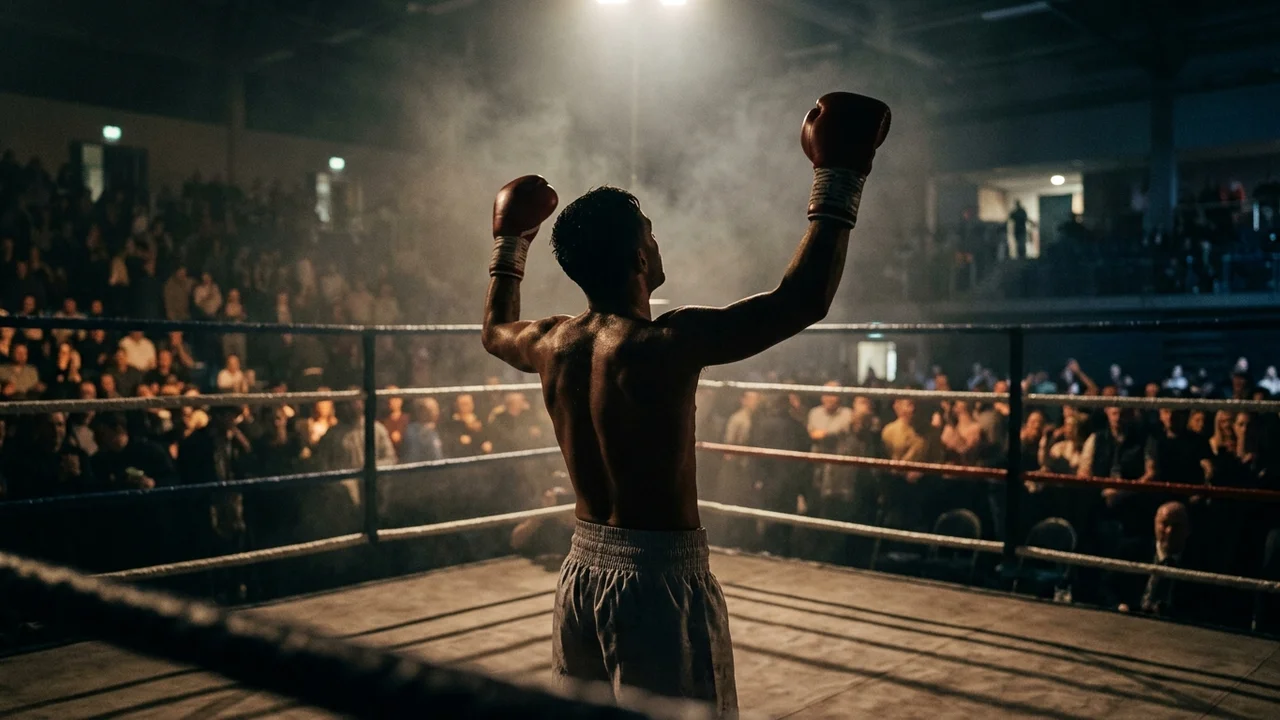
Aaron McKenna’s IBF middleweight title win in Dublin has sparked a wave of data-driven analysis, with tactical breakdowns and performance metrics dominating the conversation. The judges’ cards, 118-110, 117-111, and 116-112, leave little doubt about the clarity of his unanimous decision. Those numbers underscore not just his dominance, but the way he managed the fight and outthought Etinosa Oliha, who entered the ring unbeaten.
Praise from Irish boxing circles centers on McKenna’s poise under fire and his surgical punch selection. He systematically neutralized Oliha’s aggression, especially as the fight wore on. Analysts are dissecting his defensive movement and tactical discipline, pointing to the jab and uppercut as the weapons that repeatedly disrupted Oliha’s rhythm. These punches didn’t just score points, they set the pace and dictated where the fight was fought.
Statistical Breakdown: Jab Accuracy and Round Control Define the Win
A deep dive into the round-by-round data shows McKenna’s victory was built on accuracy and adaptability. Oliha had his moments early, particularly in the second round, but by the third, McKenna’s back-foot jab had seized control of the exchanges. Adjusting his range and timing, he shifted the momentum and never let it go.
The judges’ scores tell the story: across three cards, McKenna averaged a six-point margin, with one judge giving him all but two rounds. That edge came from more than just landed punches. McKenna’s ring generalship stood out as he consistently pushed Oliha onto the ropes, using his reach to land clean shots to both head and body. Even after a clash of heads left him bleeding in the 11th, McKenna responded with sharp counters, showing both awareness and grit.
In the final round, with Oliha desperate for a stoppage, McKenna stuck to his jab, choosing precision and movement over risk. That approach frustrated Oliha and capped a performance defined by clean, effective punching.
McKenna’s perfect 21-0 record, achieved without a previous home-soil appearance, now stands alongside his efficiency in dismantling an undefeated opponent. Analysts are already framing him as a statistically reliable champion.
McKenna’s Ambitions and Irish Boxing’s Momentum
After the fight, McKenna wasted no time setting his sights higher. “I want to collect every belt in boxing. I’m the best middleweight in the world, and super-middleweight; I don’t mind jumping up either,” he declared. His ambitions, spanning multiple divisions, are fueling debate among analysts about how his style and numbers might stack up against other elite fighters.
Momentum in Irish boxing is building. The Zuffa Boxing 10 card delivered a clean sweep for home fighters, a result now cited as proof of rising standards and tactical evolution in the Irish scene. For McKenna, this win is more than a personal milestone. It sets a new analytical benchmark as he eyes unification bouts.
The Dublin crowd’s celebrations have barely faded, yet the boxing world is already poring over McKenna’s stats and what they mean for the global middleweight picture. His blend of composure, accuracy, and adaptability now serves as the template for anyone hoping to challenge him. The narrative has shifted: future opponents face a puzzle defined by data as much as physicality.
Betting markets and tactical previews are already reflecting the statistical confidence in McKenna’s continued rise. This focus is shaping pre-fight analysis trends in boxing, where the numbers behind a champion’s performance increasingly drive the debate.
McKenna’s night in Dublin, built on measurable superiority, has set a new standard for title fights on Irish soil.