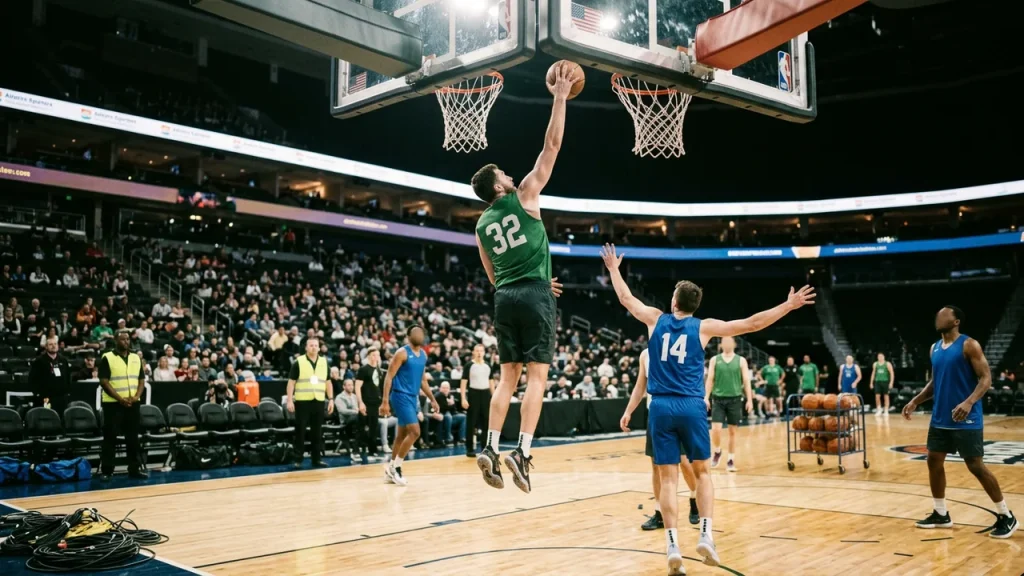
Utah’s backcourt plans took a major hit when the NCAA ruled Israeli guard Noam Yaacov ineligible, leaving a glaring gap in the Utes’ projected lineup. Statisticians and analysts immediately zeroed in on the tactical loss, pointing to Yaacov’s BNXT League production as a clear benchmark for what Utah will now have to replace.
Yaacov’s numbers in Europe jump off the page. He averaged 17.4 points, 5.8 assists, and 3.9 rebounds per game for Filou Oostende, earning a spot as a BNXT League MVP finalist. His advanced playmaking, especially his assist rate and knack for generating high-value possessions, made him a natural fit for Utah’s offense, which thrives on efficient guard play and sharp decision-making in the halfcourt.
No clear explanation has emerged for the NCAA’s decision, leaving Utah’s staff and analytics community scrambling to assess the fallout. Head coach Alex Jensen wished Yaacov well and confirmed the guard would pursue other opportunities, a statement that underscores just how abruptly Utah’s plans have changed. The Utes lose a guard who created nearly six assists per game in one of Europe’s toughest leagues and who proved he could handle high-usage roles in playoff pressure, leading Oostende to the Belgian championship finals.

Here’s a snapshot of Yaacov’s 2025-26 BNXT League stats:
| Category | Stat Line | BNXT League Ranking (approx.) |
|---|---|---|
| Points | 17.4 | Top 10 |
| Assists | 5.8 | Top 5 |
| Rebounds | 3.9 | Top 15 (for guards) |
| MVP Voting | Finalist | Top 3 |
These numbers suggested Yaacov could have stepped into a starting or high-leverage bench role for Utah, boosting both offensive efficiency and lineup flexibility. His ability to run pick-and-rolls, create in transition, and defend multiple backcourt spots addressed several tactical weaknesses for a Utah team looking to climb the Pac-12 efficiency charts.
The NCAA’s decision has drawn comparisons to other recent eligibility controversies, especially as debates intensify over professional contracts and college eligibility. The specifics of Yaacov’s case remain undisclosed, but the broader debate has only grown louder, with the SEC recently taking a public stance against allowing athletes with pro contracts to return to college play.
Utah now faces a scramble. The coaching staff must recalibrate the guard rotation and hunt for new sources of playmaking and scoring. Yaacov, after participating in both the G League and NBA Draft Combines but going undrafted in 2026, is reportedly exploring professional options. His next move will provide fresh data points for analysts tracking his career.
One thing is certain: Yaacov’s production in Belgium set a high bar for any guard Utah targets as a replacement. Without his proven output, the Utes must rethink usage rates, assist distribution, and late-game shot creation, critical variables that had been projected upward with his arrival. Every roster decision Utah makes in the coming months will be measured against the numbers Yaacov leaves behind.